Robert Poortinga
Artist&Pianist


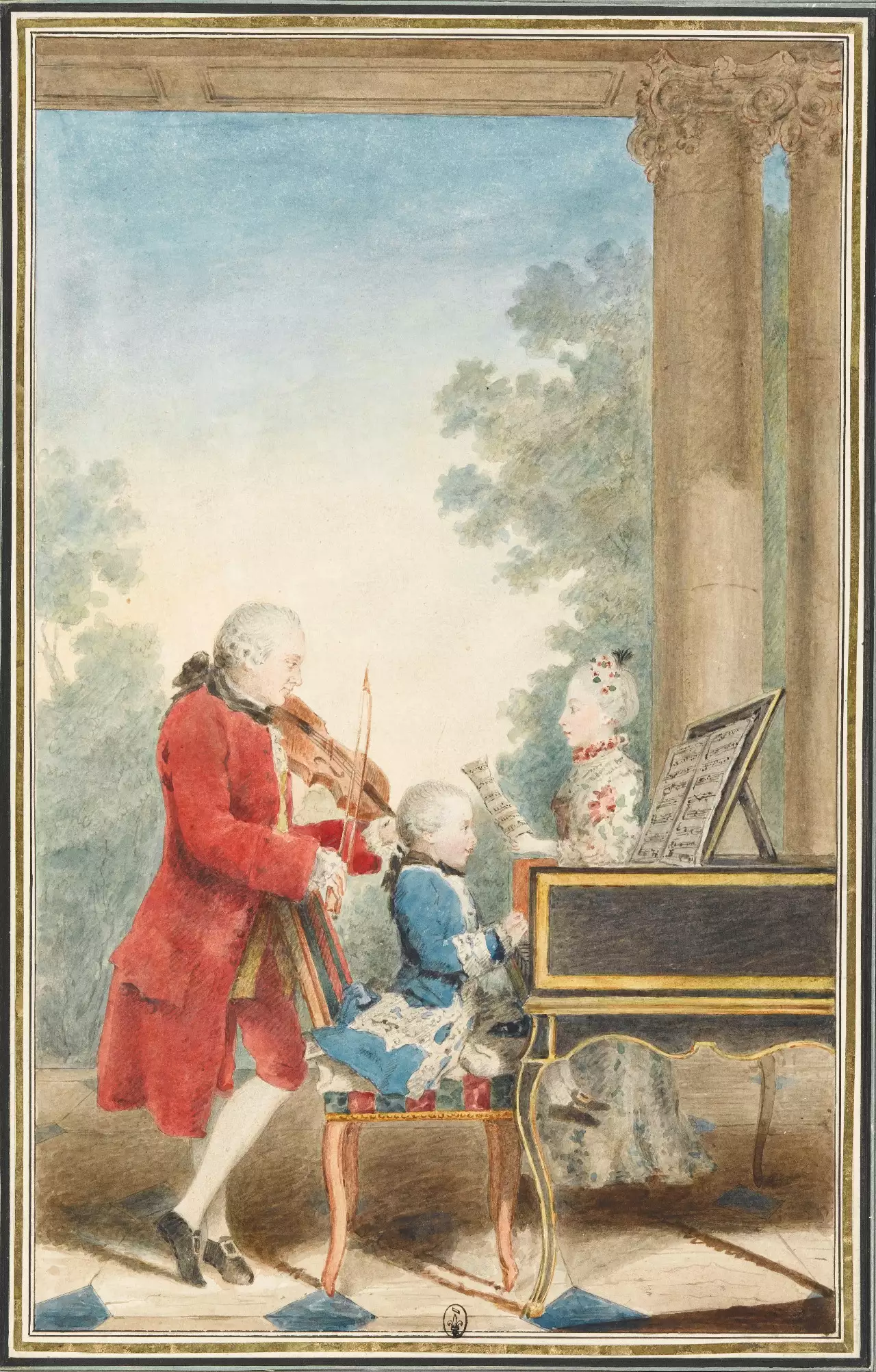
I will not describe to you the other circumstances in which we have found ourselves for the last three months. Had it not been for God’s quite extraordinary grace, my children would not have survived these severe illnesses, nor we these heavy blows. (Leopold Mozart, letter to J.L. Hagenauer, 12.12.1765)
Travel has never been easier than today. We can fly in a few hours to another continent and, with a bit of luck, sleep peacefully without a bothersome neighbor and avoid jetlag. Life and travel in the 18th century, however, was a completely different experience: deaths, robberies, broken carriages, unavailable horses, and a confusing patchwork of currencies.
There is nothing more fascinating than the story of Wolfgang Amadeus Mozart’s travel, who changed performing artistry forever. Many books have been written about Mozart on the road, and during my research for my book, I realized something crucial: Leopold Mozart, Wolfgang’s father, was a true visionary. His three-year-long ‘grand tour’ from 1763–1766 across Germany, France, Holland, Belgium, and England was a massive undertaking — even including a trial tour to Vienna. The life of Mozart on the road is vividly described in Leopold’s letters to his patron and friend, J.L. Hagenauer.
For example, at the beginning of their tour, a carriage axle broke due to poor road conditions. They had to improvise with a tree branch before carpenters and blacksmiths could fix it properly:
“We were told that the carriage would be restored to health early this morning, that is, in twenty-four hours. But the devil take it! Then we hoped to get away after lunch. In vain! The cartwright chopped and sawed, the smith singed and burnt and hammered hard. The latter would have set the patient on his legs again at once and made him walk, if the former could have handed him over more quickly. What were we to do now? We could only, most reluctantly, be patient! And we still have to do so, as I write. For the business will hardly be finished before this evening, so that we shall have to settle down here for another night. The most important side of the matter is the expense, for at least the honour of feeding the horses and the driver falls to me. Yet by Heaven it is better to lose ten wheels than a foot or a few fingers. We are well, thank God.”
18th-Century Traveling Musicians: From Vagabonds to Visionaries
In the 18th century, traveling musicians were often viewed with suspicion. Many were considered vagabonds, criminals, or grifters, moving from town to town and earning a living by any means possible. In the medieval period, musicians often made money by reporting news from distant places rather than from their music. (For a detailed account, the book The Invention of News is a must-read.)
People in general were cautious of travelers, fearing trouble or theft. As Reijnders notes:
“Travelling musicians and singers were often viewed with suspicion: called ‘bellows and decoys of the devil,’ accused of adultery and theft. Some rose to honourable positions at court, but most were seen as vagabonds.” (Reijnders, p.164)
Leopold Mozart understood that his children had to appear different. He created an aura of sophistication through letters, public performances, and careful attention to their accommodations — often far better than simple inns. He also ensured their musical development continued on the road by visiting famous instrument makers, such as the piano-builder Stein. The Mozarts even traveled with a portable practice piano, allowing Wolfgang and Nannerl to train while on the move — a practice shared centuries later by Liszt and Rachmaninov.
‘Travel itself was dangerous. Illnesses were frequent, and Mozart nearly died from typhoid in Holland in 1765. In remote areas, travelers sometimes feared mythical creatures like devils, satyrs, cyclopes, or werewolves. In Groningen and Drenthe, belief in local werewolves persisted well into the 17th century.‘ (Reijnders, Reislust, p.156–157)
Leopold Mozart’s Master Plan for Touring Europe
Leopold’s planning for his children’s tours was meticulous. Wolfgang and Nannerl were just seven and eleven years old, yet they traveled in a coach, performed in royal courts, and showcased their talents to impress patrons and earn a living.
Every aspect was considered: visas, letters of recommendation, exquisite attire, and even ceremonial daggers. As Leopold wrote:
“Little Wolfgang has been given two magnificent swords, one from Cowtt von Frankenberg, Archbishop of Malines, the other from General Count De Ferraris. My little girl has received Dutch lace from the Archbishop, and from other courtiers cloaks, coats and so forth. With snuff-boxes and etuis and such stuff we shall soon be able to rig out a stall.” (4 November 1763)
Lodging was another challenge. Food was often dreadful and expensive, and travel required handling over 40 different currencies, each with its risk of fraud.
Musically, Leopold’s children were prodigies on multiple instruments. They would switch between violin and piano, improvise for royalty, and dedicate compositions to noble patrons, often receiving generous gifts (jewellery and snuffboxes were common) and cash. Leopold sometimes noted that these gifts, including kisses on the children’s cheeks, barely covered hotel expenses. One gift from the English king, however, was particularly impressive — worth around €40,000 in today’s money.
Style, Lodgings, and Making a Grand Impression
Mozart’s travel were not only about music but also about presentation. Wolfgang and Nannerl often performed late into the night, improvising and adapting to new instruments in churches, taverns, and courts. Every performance and interaction was part of their public image.
The careful planning and cultivated appearances helped create networks that proved invaluable later in Mozart’s life, facilitating future concerts and commissions across Europe.
Explore Mozart’s Europe: Museums, Heritage, and Travel Tips
Mozart traveled extensively before the age of ten, using Salzburg as his home base. Today, Salzburg honors him with two museums and the Mozarteum concert hall and conservatory. Later in life, he settled in Vienna, giving up court employment to become one of the first freelance musicians — traveling widely until his premature death at 39.
For modern travelers, following Mozart’s travel-footsteps offers a unique glimpse into 18th-century European culture. You can explore his instruments, manuscripts, and personal belongings in Salzburg and Vienna. For practical information, opening hours, and tips, check my guest blogs on desalviotravel.com, where I share detailed itineraries and insights into these fascinating museums. For the specific blog on Wolfgang Amadeus Mozart on Desalviotravel, click here.
This post is part of my ongoing Travel and Composers project, a series connected to my upcoming book of the same name. It explores how the lives of great composers were shaped by their travels. For an overview of the series and links to all posts, visit Travel & Composers
